Status of This Document
This is a published open specification proposal authored by Nodeqore. It is not an EIA standard, is not endorsed by EIA, and creates no certification programme. Implementers may make a self-declaration of compatibility only as described in this document.
The English text is authoritative. Any translation is explanatory and must defer to this version where a conflict exists.
1. Scope
10RIS defines a compact front mounting interface for rack-mounted equipment intended for home, lab, and small-office environments. Its purpose is to give enclosures, rails, panels, shelves, and accessories a common geometry without implying compatibility with 19-inch equipment.
The core requirements cover the front-panel width, rail mounting-hole centrelines, vertical mounting-hole spacing, and two mounting-hole types. Depth, rail construction, enclosure geometry, load rating, thermal performance, grounding, cable management, and accessory design are implementation guidance. They are not conditions of core interface compatibility.
2. Conventions and Terms
The key words MUST, MUST NOT, REQUIRED, SHOULD, SHOULD NOT, and MAY in this document are to be interpreted as described by RFC 8174 when, and only when, they appear in all capitals.
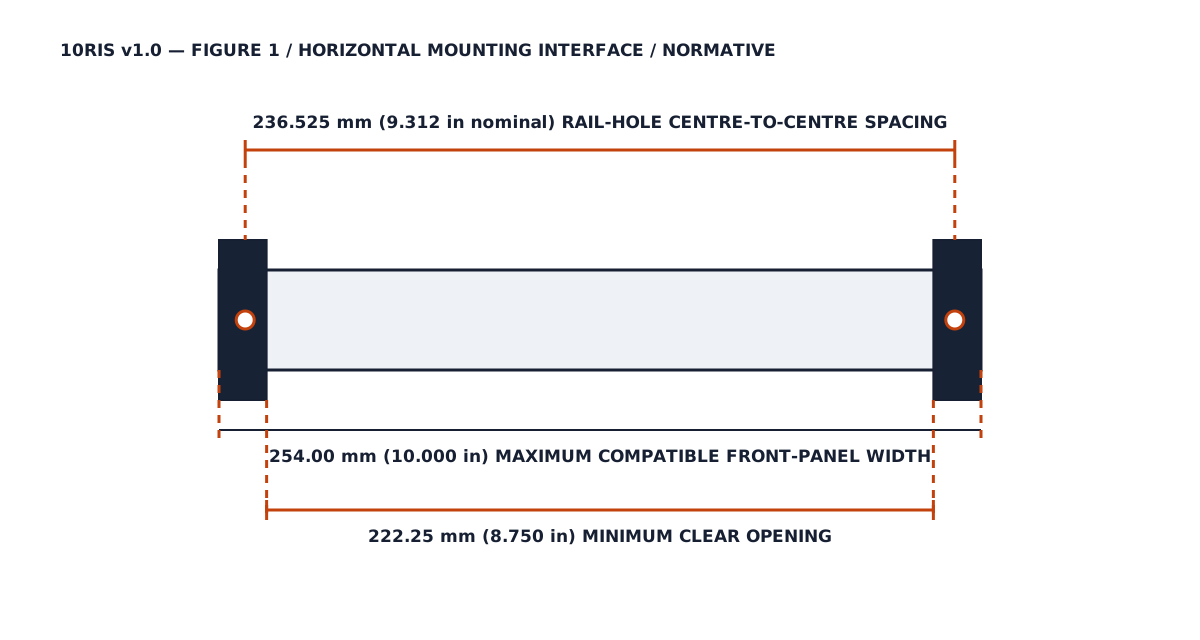
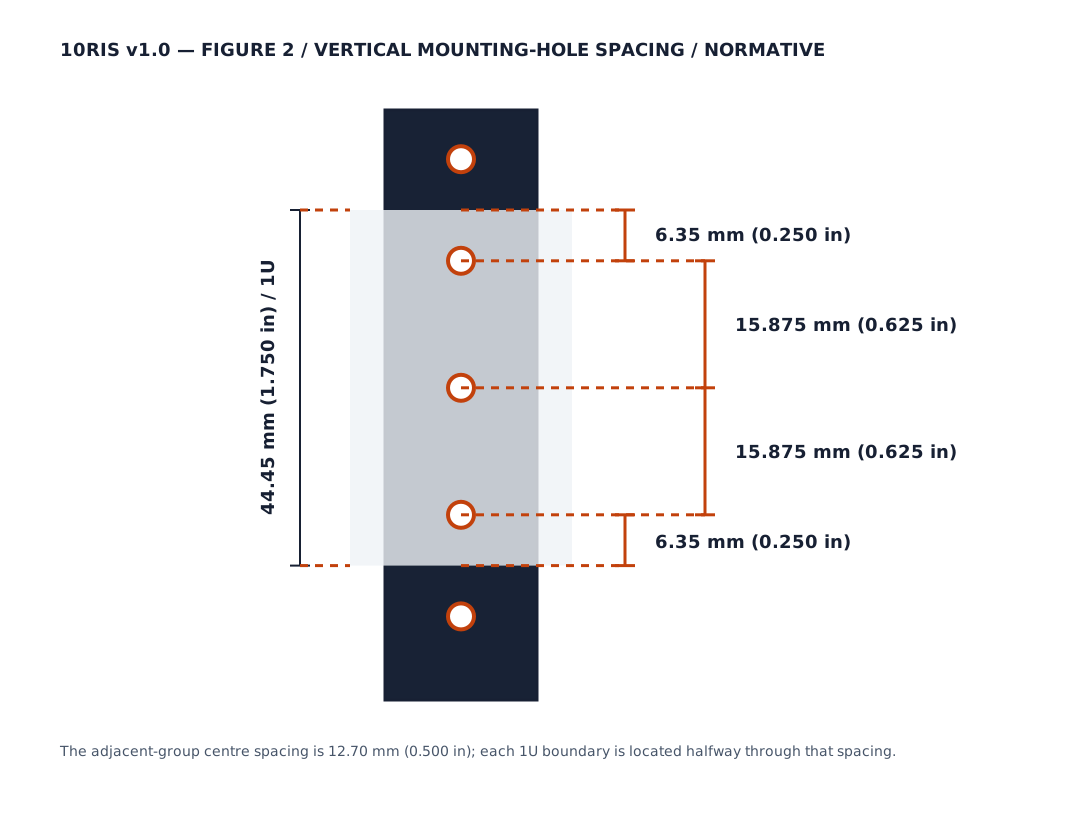
Front-panel width is the maximum width across the equipment face, including its mounting flanges or rack ears. Rail mounting-hole centreline is the vertical line through the centres of a rail's mounting-hole series and is the rail datum for horizontal interface dimensions. Rail mounting-hole centre-to-centre spacing is the distance between the centres of corresponding holes in the left and right front rails. Clear opening is the smallest unobstructed distance between the inner faces of the two front rails. U is a rack unit with a nominal height of 44.45 mm.
3. Core Interface Requirements
An implementation claiming 10RIS Core Interface Compatible MUST meet the following requirements at the front mounting plane:
Figure 1 is normative for the relationship between the horizontal dimensions. The rail mounting-hole centrelines and clear-opening limit remain independent; a rail's holes are not assumed to sit at its geometric centre.
10RIS intentionally specifies functional limits rather than unvalidated bilateral manufacturing tolerances. A manufacturer remains responsible for selecting tolerances, material, process controls, and inspection suitable to consistently meet these limits.
4. Mounting-Hole Types
An implementation MUST support at least one of these core mounting-hole types and MUST state which type it supports.
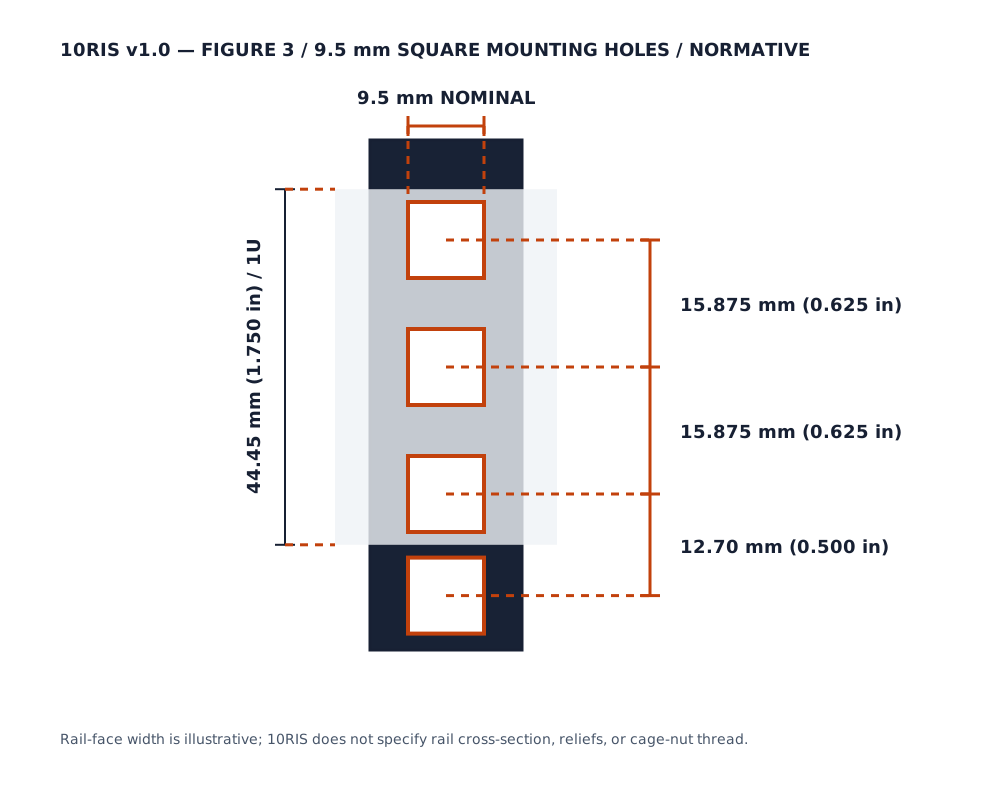
- 9.5 mm square mounting holes. Each mounting hole is a nominal 9.5 mm square suitable for a cage-nut system selected by the implementation.
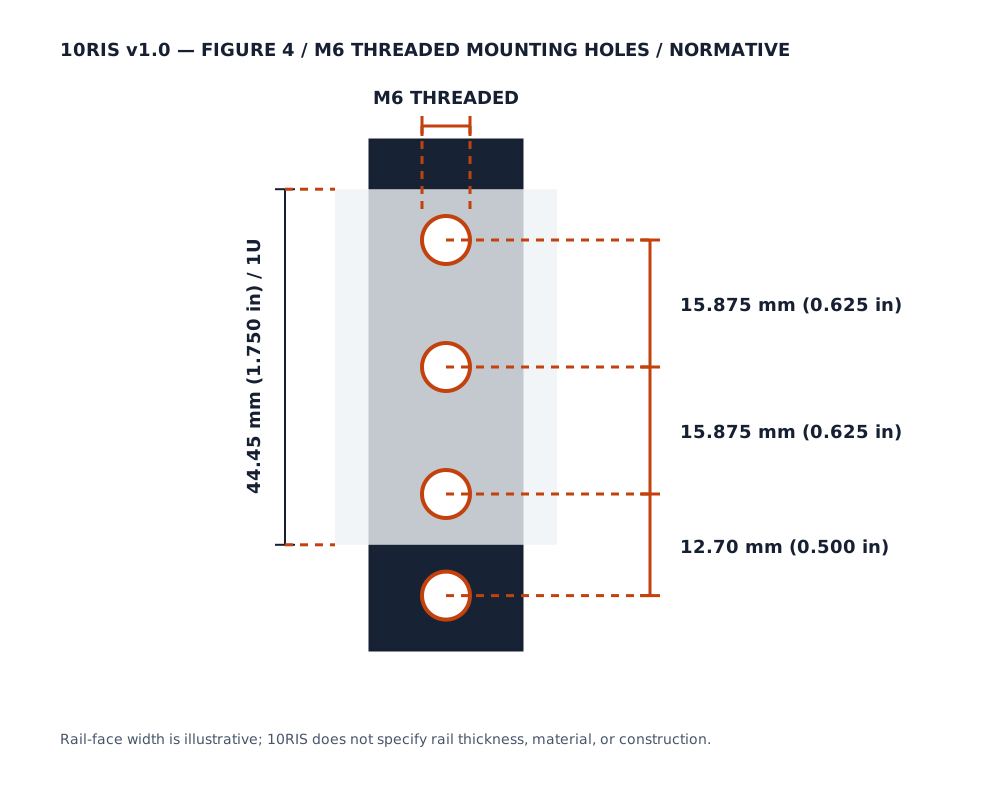
- M6 threaded mounting holes. Each mounting hole has an M6 thread.
The mounting-hole type applies to the same vertical mounting-hole spacing in both cases. A 3 mm semicircular relief, a particular rail cross-section, a chosen cage-nut thread, and any screw-head style are optional implementation choices; none changes core compatibility.
5. Reference Figures
The linked SVG source files are part of this document and are normative where identified. Their labels are designed for screen, print, and machine-independent download.
- Figure 1 — Horizontal mounting interface (normative)
- Figure 2 — Vertical mounting-hole spacing (normative)
- Figure 3 — 9.5 mm square mounting holes (normative)
- Figure 4 — M6 threaded mounting holes (normative)
Reference drawings
Normative SVG Figures
Build a Rack Reference
Create a basic front-elevation reference for a selected mounting-hole type and U height with the 10RIS Rack Reference Generator. The tool is non-normative and does not assess construction, depth, loading, or conformance.
6. Conformance and Self-Declaration
No Nodeqore review, badge, approval, or endorsement is implied by this specification. A product maker MAY state “10RIS Core Interface Compatible, self-declared” only after measuring a representative production configuration.
The declaration MUST identify the product and tested configuration, the supported mounting-hole type or types, the measured maximum front-panel width, the measured minimum clear opening, the measured rail mounting-hole centre-to-centre spacing used, the number of usable rack units (U), and the measurement date. It MUST name this document as 10-Inch Rack Interface Specification (10RIS), Version 1.0 — Authored by Nodeqore.
7. Non-Normative Implementation Guidance
Depth is intentionally not a core compatibility requirement. EIA-310 mounting practice does not create a universal cabinet depth, and real equipment manuals specify their own rail and cabinet ranges. Manufacturers SHOULD declare usable installation depth, rail-adjustment range, rear cable-clearance envelope, and any front-door or rear-door clearance before a buyer selects an enclosure.
For context, IBM and Cisco installation materials describe cabinet/rail requirements for their own equipment, not a universal 10-inch depth: IBM rack specifications and Cisco cabinet and rack requirements.
Load, wall anchoring, cooling, electrical safety, and grounding require product-specific engineering. An enclosure MUST NOT use a 10RIS compatibility claim to imply a load rating, wall-installation approval, thermal capacity, or electrical compliance.
8. Changes and Feedback
Version 1.0 is the initial published version. Later versions will keep their own stable URLs and change records; a compatible implementation MUST cite the version it used.
Submit errata or change proposals through the 10RIS public GitHub Issues. Reports should identify the version, relevant figure or section, hardware configuration, measured values, and a reproducible interoperability concern.
9. Licence, Attribution, and Trademarks
The text and reference SVG figures in this 10RIS v1.0 document are licensed under Creative Commons Attribution 4.0 International. Reuse must preserve appropriate attribution, link the licence, and indicate modifications. A suggested attribution is: “10-Inch Rack Interface Specification (10RIS), Version 1.0 — Authored by Nodeqore, CC BY 4.0.”
Nodeqore names, logos, and trademarks are not licensed by CC BY 4.0. This document is a technical proposal, not legal, safety, certification, or compliance advice.